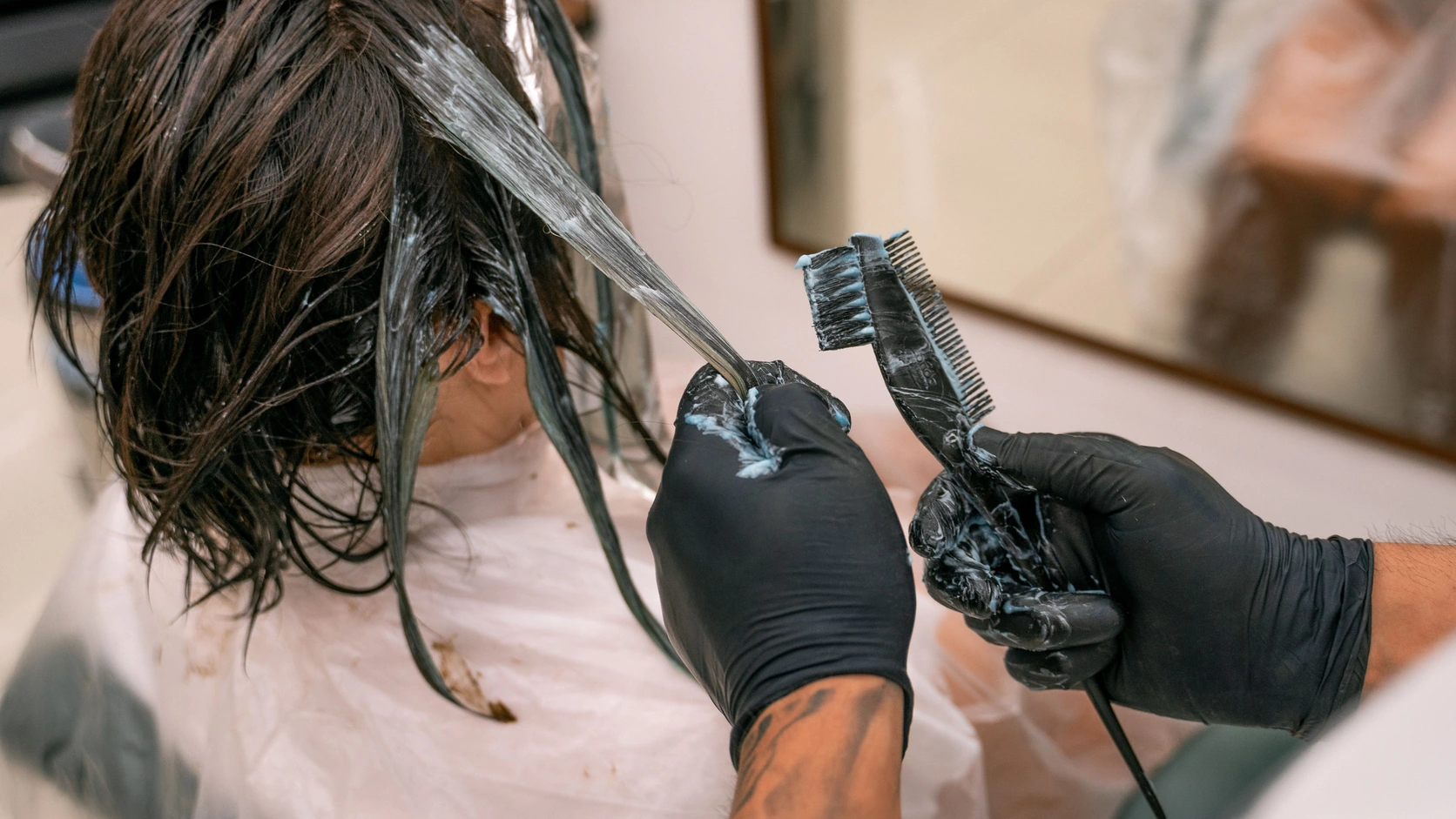
A hair color strand test is a trial application of the planned color or lightener on a small section before treating the full head. It gives an early view of the dry color, processing response, and condition of the treated hair.
For the result to be useful, the sample must represent the target hair and follow the planned process. Once the strand is dry, the result should help you decide whether to proceed, adjust, or stop.
What Is a Hair Color Strand Test?
A strand test shows how the selected hair responds in depth, tone, lift, coverage, deposit, processing, and condition. It is especially useful when the hair is porous, previously colored, lightened, chemically treated, or its history is uncertain. Wella recommends testing in these situations, then checking both the color result and hair condition after rinsing. The manufacturer instructions still determine the formula and timing. (Wella Color Charm Education Book)
Hair Color Strand Test vs. Patch Test
These two tests serve different purposes.
| Test | What it checks | Where it is performed | Can it replace the other test? |
|---|---|---|---|
| Strand test | Color, lift, processing behavior, and hair condition | On a small section of hair | No |
| Patch or allergy alert test | Possible skin sensitivity to the product | On the skin, as directed by the product | No |
A strand test cannot show whether you will have an allergic reaction. A patch test, in turn, cannot predict the final shade or show how the hair fiber will handle a color service. The FDA advises users to follow every package warning and complete the product’s patch test before dyeing their hair. (FDA hair dye safety guidance)
Where Should You Take a Test Strand From?
Choose for representativeness first and concealment second. Even a well-hidden section must still resemble the target hair.
Use the following checks to confirm that the test section matches the target area:
- Is it virgin hair or previously colored hair?
- Does it have a similar starting level and percentage of gray?
- Are you testing roots, mid-lengths, ends, or all three?
- Does it have similar porosity, damage, and chemical history?
- Will it receive the same product and application method?
A healthy section at the back may not represent porous, lightened ends. Likewise, a test taken only from natural regrowth cannot predict how older artificial pigment will respond.
When one strand is not enough
Use more than one representative strand when the service covers clearly different areas. These may include virgin regrowth, colored lengths, porous ends, gray sections, highlights, banding, or zones with different chemical histories.
Attached, cut, or shed hair?
| Method | Main advantage | Main limitation |
|---|---|---|
| Attached hidden strand | Most closely reproduces the location and application method | Must remain isolated from surrounding hair |
| Cut strand | Easy to process, rinse, label, and compare separately | Removes a small amount of hair and still requires representative sampling |
| Shed hair from a brush | Does not require cutting | May combine hairs from different areas, gray percentages, and color histories |
Hair collected from a brush may show the general color direction, but it is less reliable when predicting the response of a specific zone.
How to Do a Strand Test for Hair Color
1. Read the product directions before mixing
Read the instructions for testing, mixing, processing, rinsing, and disposal. Do not use the mixing ratio or processing time from another product. Prepare the specified tools, gloves, a timer, and a suitable barrier before you begin.
2. Select and document the test section
Before mixing, record the representative strand’s location, starting depth, previous color, and condition. Then isolate it from the surrounding hair.
3. Mix only the amount required for the test
Use the exact product, shade, developer or activator, and manufacturer-specified mixing ratio intended for the full application. If the kit contains several components, do not leave one out or estimate the proportions by eye.
You may not need to mix the entire package, but the test batch must keep the instructed proportions. If the packaging does not provide enough information for accurate measurement, contact the manufacturer rather than guess.
Never assume that an activated mixture can be stored. Follow the product’s storage and disposal directions, as unmixed components and mixed product are not equivalent.
4. Apply it as planned for the full service
Reproduce the planned placement, saturation, and section size. If the roots and lengths will be treated differently, the test should reflect that. A different developer, extra product, or longer processing time would amount to testing a different service.
5. Process for the product-directed time
Start the timer as directed and follow the stated checkpoints without exceeding the permitted time. There is no universal answer to how long to leave hair dye on a test strand. Permanent color, direct dye, depositing products, and lightener all work through different systems.
Remember that total test time includes preparation, processing, rinsing, and drying, along with any later observation required by the manufacturer.
6. Rinse, complete the directed after-steps, and dry fully
At the instructed time, rinse the strand and complete the required after-steps. Let it dry fully before judging the shade. Wet hair usually looks darker, while residue can mask both tone and feel. When possible, evaluate the result under neutral light or indirect daylight.
If an attached test strand will remain on the head for a later full application, keep it separate unless the product directions or color plan specifically require that section to be processed again.
7. Record the result
Record the product, shade, ratio, strand location, timing, starting condition, and dry color. Also note any change in feel, elasticity, or breakage.
How to Read Hair Color Strand Test Results
Evaluate the result in two parts: color and condition.
Check the dry color
- Depth or lift: Did it become as dark or light as intended?
- Tone: Is it neutral, warm, cool, orange, green, muddy, or off-target?
- Evenness: Did roots, mid-lengths, and ends respond differently?
- Coverage or deposit: Did gray hair accept color, or did porous areas grab too much?
- Lighting: Does it remain acceptable outside warm light or a filtered image?
Check the condition of the hair
Compare the test strand with nearby untreated hair. Check for marked roughness, unusual stretching, a gummy feel, or breakage. Reaching the target shade does not count as a successful result if the strand cannot tolerate the process. If the outcome is unclear or the strand deteriorates significantly, pause and ask an experienced colorist to assess it.
Read roots, mid-lengths, and ends separately
One strand can show several different results. For example, your notes might read:
Roots: target depth reached; mid-lengths: warmer than target; ends: darker and more porous.
Do not average these reactions into a single result. One formula or application method may not suit every zone.
Pass, Adjust, or Stop?
| Test result | Decision | What it means |
|---|---|---|
| Dry color is close to the target and the strand remains stable | Pass | Consider proceeding according to the product directions, without treating the test as a guarantee |
| Hair condition remains stable, but depth, tone, lift, or coverage is wrong | Adjust | Do not expand the same plan; recheck the shade, starting level, product choice, and instructions |
| Roots, mid-lengths, and ends respond differently | Adjust / Test again | Use representative zone tests or obtain a professional section-by-section plan |
| The strand becomes gummy, unusually stretchy, or breaks | Stop | Do not apply the same chemical plan to the full head |
| The history or result cannot be interpreted confidently | Stop / Refer | Re-test under controlled conditions or seek professional assessment |
An orange, green, dark, or uneven strand does not automatically mean you need more bleach, a stronger developer, or corrective color. It means the plan needs to be reassessed.
Box Dye, Demi/Semi Color, and Bleach Strand Tests
People often ask how to do a strand test with box dye or how to do a bleach strand test. The basic sequence is the same, but what you need to evaluate depends on the product.
| Product type | What to evaluate most closely |
|---|---|
| Permanent or box dye | Depth, tone, gray coverage, previous-color interaction, and hair condition |
| Demi- or semi-permanent color | Deposit, tone, excessive grab on porous areas, and the product’s expected fade behavior |
| Bleach or lightener | Lift level, underlying pigment, evenness, elasticity, and signs of breakage |
Matrix provides exact SoColor test quantities and directs users to rinse and dry the strand. Those parameters apply to that product line, not to every hair color. (Matrix SoColor product knowledge guide)
What a Strand Test Can—and Cannot—Predict
A well-designed test can indicate the likely color direction, lift, deposit, coverage, and any unacceptable condition changes in the sampled hair. It cannot guarantee the same result elsewhere. Porosity, color history, scalp heat, application speed, section size, saturation, and overlap may all differ. Nor can it replace an allergy alert test. Treat the result as evidence, not a promise.
Simple Strand Test Record
| Field | What to record |
|---|---|
| Date and strand location | Date, area, and attached, cut, or shed method |
| Starting condition | Depth, tone, gray, previous color, porosity, or damage |
| Product and formula | Product, shade, developer/activator, and instructed ratio |
| Timing | Start, checkpoints, and rinse time |
| Dry result | Depth/lift, tone, coverage, and evenness |
| Hair condition | Feel, elasticity, and breakage |
| Decision | Pass, Adjust, Test Again, or Stop |
Frequently Asked Questions
How long should hair dye stay on a test strand?
Use the processing time specified for that exact product. Then allow enough time to rinse, dry, and evaluate the strand, including any later observation period required by the manufacturer.
Should you rinse and dry a test strand before checking it?
Yes. Complete the product-directed rinse and after-steps, then let the strand dry fully before evaluating its color and condition.
How much hair do you need for a strand test?
Use a section that is small enough to isolate but large enough to show how the target area responds. Follow any product-specific instruction on strand size.
Can you use hair from a brush for a strand test?
It can provide a rough preview, but shed hair may combine different zones, gray percentages, and color histories. A representative attached or cut strand usually matches the planned application more closely.
Can one test strand predict the whole head?
No. It only predicts how the sampled hair responds under the tested conditions. Use additional samples when the roots, lengths, ends, gray sections, or previously lightened areas differ.
Do hairdressers have to perform a strand test?
There is no universal rule. Requirements can depend on the product instructions, service type, salon policy, insurance, and local regulations. Many professionals use the test to assess risk and plan the color service.
How much does a salon strand test cost?
There is no standard price. Some salons include the test in the consultation, while others charge for it separately.
Use the Test to Make a Decision
An effective strand test must be representative, not simply hidden. Match the planned formula and process, assess the strand after rinsing and drying, and check both color and condition. The result should tell you whether the full application can proceed, needs adjustment, or should stop.
Related reading: See BODA’s professional hair color range and shade options.